1. Introduction: Choosing the Right Office Floor
Office flooring is more than a decorative finish. It influences the first impression a visitor receives, the comfort employees experience throughout the day, the sound level in shared spaces, cleaning routines and the long-term operating cost of a workplace. For Malaysian businesses, the choice also needs to account for local weather, tracked-in rainwater, air-conditioning, building access, usage patterns and the practical realities of keeping a busy office open during renovation.
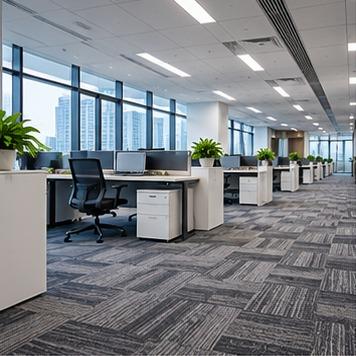
Two popular choices are carpet and vinyl flooring. Both are available in commercial styles, colours and formats, but they solve different problems. Carpet—especially modular carpet tile—can soften a room acoustically and create a warm, comfortable atmosphere. Vinyl flooring offers a hard, easy-to-clean surface and a broad range of wood, stone and contemporary designs.
There is no universal winner. The right answer depends on where the floor will be installed, how people use the space and what the facilities team can maintain consistently. This guide compares the materials in practical terms and explains when a hybrid layout can deliver the best balance.
MFloor’s website presents the business as a specialist in carpets and vinyl flooring, with office carpets, vinyl flooring, carpet tiles, broadloom carpets and carpet-cleaning services among its offerings. That product mix makes a zone-by-zone comparison especially relevant for businesses planning an office fit-out or refurbishment.
2. Understanding Commercial Carpet Flooring
Commercial carpet is available as broadloom (wide rolls) and modular carpet tiles. Broadloom creates a continuous, seamless appearance and can work well in large rooms with relatively simple layouts. Carpet tiles are modular squares or planks installed in a planned pattern. Their main practical advantage is that an individual damaged or stained tile can often be replaced without removing the entire floor.
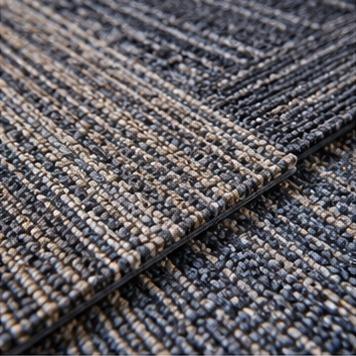
For offices, carpet tiles are frequently considered for open-plan work areas, meeting rooms, executive offices and collaboration zones. The textile surface helps absorb some sound energy and reduces the sharp impact sound of footsteps compared with a hard surface. It can also make a room feel warmer and more comfortable underfoot.
Commercial suitability depends on the fibre, pile construction, backing, density, colour and manufacturer’s performance specification—not simply on whether a product is called “carpet”. High-traffic routes need products designed for that duty. Chair castors, rolling loads, entrance dirt and furniture movement should be considered before choosing a style.
A sensible specification should identify the intended traffic level, cleaning method, tile dimensions, installation pattern, replacement stock and any requirements for static control or indoor-air quality. Ask for product data and maintenance instructions rather than relying on appearance alone.
3. Understanding Commercial Vinyl Flooring
Vinyl flooring is a resilient, non-textile surface supplied in formats such as sheets, tiles and planks. Luxury vinyl tile (LVT) and luxury vinyl plank (LVP) are popular design-led formats because they can reproduce the appearance of timber, stone or concrete while providing a practical finished surface. Other vinyl constructions are designed for particular commercial or technical uses.
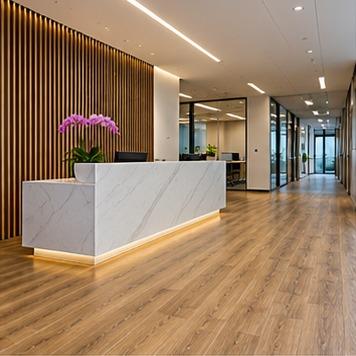
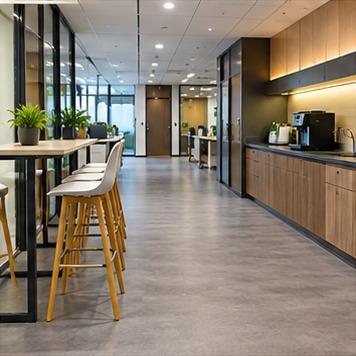
For offices, vinyl is often considered for reception areas, corridors, pantry zones, breakout spaces and other places where routine wiping and spill response are important. Its smooth surface is generally straightforward to sweep and damp-mop, provided the cleaning products and methods follow the manufacturer’s instructions.
Not all vinyl is interchangeable. Product thickness, wear-layer specification, construction, surface texture, slip performance, dimensional stability and installation method all affect suitability. A product intended for light domestic use should not automatically be specified for a busy commercial corridor.
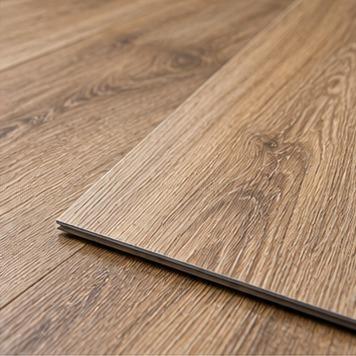
Before selection, confirm the expected foot traffic, furniture loads, rolling-chair use, exposure to water, substrate condition and the manufacturer’s commercial-use rating. Ask whether the product is glue-down, loose-lay or click installation, and confirm which method is appropriate for the building and site conditions.
4. Carpet vs Vinyl: Side-by-Side Comparison
The most useful comparison is based on workplace requirements rather than broad claims that one material is always better.
- Acoustics: Carpet generally absorbs more sound at the floor surface and softens footfall noise. Vinyl is a hard surface and usually reflects more sound; acoustic performance may need to be addressed through ceilings, wall treatments, furniture and underlay systems.
- Routine cleaning: Vinyl is usually simpler to sweep and damp-mop. Carpet requires regular vacuuming, prompt spot treatment and periodic deeper cleaning. Carpet tile can make local repairs easier where a tile is damaged.
- Moisture and spills: Vinyl is generally better suited to areas where occasional spills and damp cleaning are expected. Carpet can retain moisture if a spill penetrates the pile and backing; quick response and thorough drying are important.
- Comfort and appearance: Carpet provides a softer, warmer feel and can help define quiet work zones. Vinyl offers crisp, cleanable surfaces and a wide variety of visual finishes.
- Repair: Individual carpet tiles can often be replaced locally. Vinyl repair depends on the product format, installation method, pattern and availability of matching material.
- Total cost: Compare the installed cost and the expected cost of cleaning, repairs, downtime and eventual replacement. The cheapest initial quote is not necessarily the least expensive floor over its service life.
5. Noise Control, Comfort and Employee Experience
Noise affects how a workplace feels. Conversations, footsteps, chair movement and corridor activity can make open-plan offices tiring when sound is not managed. Carpet’s fibrous surface can absorb some sound and reduce impact noise at the floor, which is why it is often considered for desk areas, meeting rooms and spaces where concentration matters.
Vinyl has other strengths, but a hard floor alone will not provide the same soft-surface sound absorption as carpet. If vinyl is preferred for design or cleaning reasons, consider the room as a complete acoustic system. Ceiling absorption, acoustic wall panels, partitions, curtains, upholstered furniture and thoughtful zoning can all contribute.
Comfort is also personal and task-dependent. Employees who stand for long periods may value a softer surface, while wheeled chairs and frequent movement may require a carefully selected carpet tile or a hard floor with appropriate chair mats. Test samples in the actual lighting and, where possible, assess them under the furniture and equipment that will be used.
A useful design approach is to place carpet in quiet work and meeting zones, then use vinyl in circulation and service zones. This can create visual separation while matching the surface to the activity.
6. Cleaning, Hygiene and Maintenance Planning
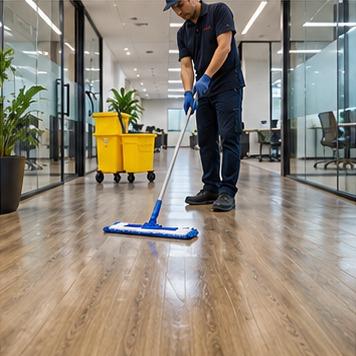
A floor performs well over time only when its maintenance plan matches the material and the amount of use it receives. Vinyl generally supports straightforward daily cleaning: remove loose dirt, use an approved damp-mopping method and deal with spills promptly. Avoid harsh chemicals, abrasive pads or excess water unless the product manufacturer specifically permits them.
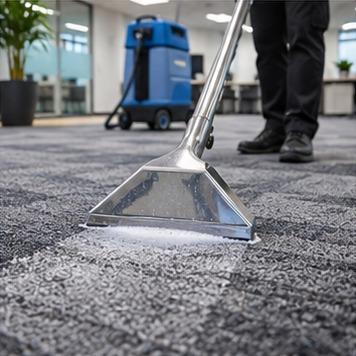
Carpet needs routine vacuuming suited to the pile and traffic level. Entrance mats help capture grit before it reaches the carpet. Spills should be treated quickly using the recommended spot-cleaning method. Periodic professional deep cleaning may be appropriate depending on usage, appearance and the manufacturer’s guidance.
For carpet tiles, keep a small quantity of matching spare tiles from the same production batch where possible. This can simplify replacement if a tile is permanently stained or damaged. For vinyl, retain product details and installation records so that future repairs can be matched more accurately.
A facilities checklist should state who cleans each zone, how often it is cleaned, which products are approved, how wet areas are dried, how incidents are reported and when professional maintenance is scheduled. The best material is one the organisation can maintain properly with the resources it actually has.
7. Moisture, Safety, Indoor Air Quality and Site Conditions
Moisture management is essential in any flooring project. Vinyl’s surface is generally easier to wipe after a spill, but that does not mean every vinyl installation is waterproof as a complete floor assembly. Water can enter at seams, edges or poorly detailed transitions, and moisture trapped beneath an impervious covering can create problems. Carpet can hold water within its fibres and backing, so wetting events require prompt extraction and complete drying.
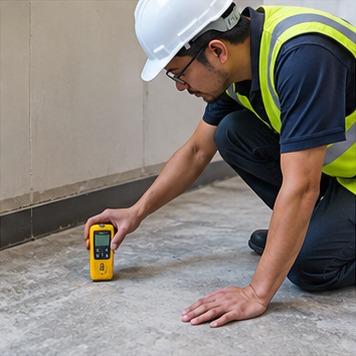
The subfloor must be assessed before either material is installed. Check that it is sound, clean, sufficiently level and within the moisture limits stated by the flooring and adhesive manufacturers. Do not cover an unresolved leak, damp slab or contaminated substrate. Follow the product-specific requirements for moisture testing, preparation, acclimatisation, adhesive selection and installation.
Slip resistance depends on the product surface, contaminants, footwear and maintenance. Select a product appropriate to the intended use and consult its technical documentation. Consider transitions, stair nosings, ramps, entrance zones and changes in floor height to reduce trip risks.
Indoor-air quality should also be considered. Flooring, adhesives, underlays and cleaning products can contribute emissions. Where relevant, request recognised emissions information or certification for the specific product and adhesive system, provide suitable ventilation during and after installation, and follow manufacturer guidance.
8. Which Flooring Works Best in Each Office Zone?
- Open-plan workstations: Carpet tile is often a strong option where acoustic comfort is important. Confirm that the selected tile is suitable for rolling chairs and the expected traffic. If vinyl is chosen, plan additional acoustic treatments.
- Meeting and conference rooms: Carpet can help soften footfall and support a quieter atmosphere. Vinyl can work where frequent cleaning or a particular design direction is more important, provided the room’s acoustics are addressed.
- Reception and visitor areas: Both materials can work. Vinyl offers a cleanable, high-impact visual finish; commercial carpet can create a welcoming and premium feel. Entrance matting is important whichever surface is selected.
- Corridors and circulation routes: These areas receive concentrated traffic and tracked-in dirt. Choose a commercial product with a suitable wear specification and a maintenance plan. Vinyl can be practical for quick cleaning; carpet tile may be suitable where sound control is a priority.
- Pantries and refreshment points: Vinyl is generally the more practical option because spills and damp cleaning are more likely. Follow the product’s slip and cleaning guidance.
- Server rooms, laboratories and specialist areas: Do not choose ordinary carpet or vinyl by appearance alone. These rooms may require static-control, chemical-resistance, cleanability or other technical performance. Obtain a specification from the relevant equipment, safety and flooring professionals.
9. Installation, Project Planning and Lifecycle Cost
A successful flooring project begins with a site survey. Measure each area, identify the existing floor build-up, inspect the substrate, note door clearances and transitions, locate furniture and equipment, and understand how the office will operate during installation. Confirm whether the project can be phased to keep essential areas open.
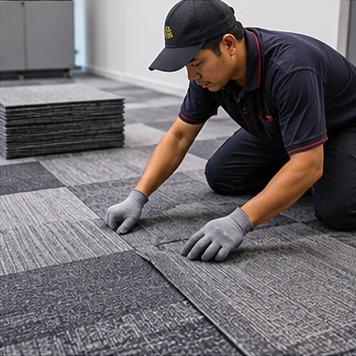
The quotation should separate material, preparation, moisture mitigation if required, adhesive or underlay, installation labour, trims, waste allowance, furniture handling, disposal and aftercare. Ask for the exact product name, format, thickness or construction, wear-layer details where relevant, warranty conditions and maintenance requirements.
Lifecycle cost includes more than the purchase price. Consider routine cleaning labour, specialist cleaning, replacement materials, repairs, disruption and the likely time before refurbishment. Carpet tile may reduce the scope of a local repair; vinyl may reduce day-to-day cleaning effort in spill-prone areas. The best financial choice depends on the actual pattern of use.
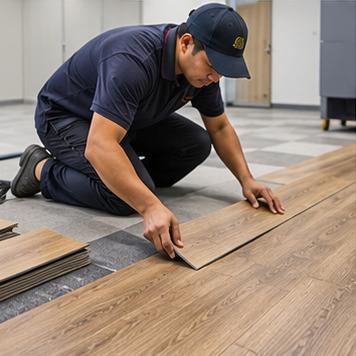
Before work begins, approve physical samples, confirm the installation pattern and direction, agree protection for adjacent finishes, and document acceptance criteria. After installation, keep spare materials, product data sheets, warranty documents and cleaning instructions in the facilities file.
10. The Hybrid Solution: Combining Carpet and Vinyl
Many offices do not need to choose one material for every room. A hybrid approach assigns each floor finish to the zone where it performs best. Carpet tiles can be used across desk neighbourhoods, meeting rooms and quiet collaboration spaces, while vinyl can be installed in reception routes, pantries, copy areas and other locations where quick cleaning is valuable.
The transition between materials needs careful detailing. Use suitable transition profiles, ensure adjacent surfaces meet safely, and avoid abrupt height changes that create trip hazards. Coordinate colours and textures so that the change of material feels intentional and supports wayfinding.
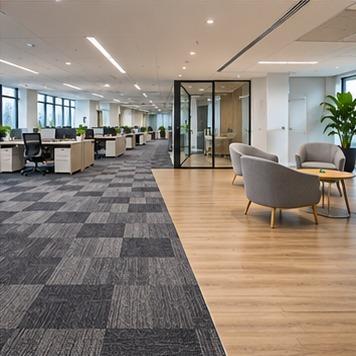
A hybrid plan should be drawn on the office layout before ordering. Identify the boundary lines, door thresholds, furniture positions, floor boxes and service access points. Confirm that each product is compatible with the substrate and that the installation sequence will not damage completed areas.
The goal is not to use two materials simply for variety. It is to match acoustic comfort, cleanability, durability and appearance to the function of each space. A considered combination can deliver a more balanced workplace than a single finish applied everywhere.
11. How to Choose: A Practical Decision Checklist
Use the following questions to guide a flooring consultation:
- What activities take place in each room, and how many people use it each day?
- Which zones need stronger sound absorption or a softer underfoot feel?
- Where are spills, damp cleaning or tracked-in rainwater most likely?
- Will office chairs, trolleys or heavy furniture move across the surface?
- What cleaning staff, equipment and maintenance budget are available?
- What are the substrate condition and measured moisture levels?
- Are there specialist requirements for slip performance, static control, chemicals or indoor-air quality?
- Can the project be installed in phases to reduce business disruption?
- Are matching replacement tiles or planks likely to remain available?
- What do the product warranty and maintenance instructions actually cover?
Request samples and technical data for the exact products being considered. Ask the flooring provider to explain the trade-offs, not just recommend a colour. A good specification makes the expected performance clear and records the assumptions behind the recommendation.
For Malaysian offices, also consider the building’s air-conditioning pattern, entrance exposure, wet-weather foot traffic and the cleaning routine available to the facilities team. Site-specific assessment is more reliable than selecting flooring from a photograph or a generic online comparison.
12. Conclusion: Carpet or Vinyl for Your Office?
Carpet and vinyl both have a place in modern commercial interiors. Carpet is usually the stronger choice when acoustic comfort, warmth and a softer workplace atmosphere are priorities. Vinyl is usually the more practical choice where easy surface cleaning, spill response and a hard-wearing visual finish are central requirements. The exact result depends on product specification, installation quality, site conditions and maintenance.
For many offices, the most balanced answer is a combination: commercial carpet tiles in work and meeting zones, with suitable vinyl in reception, corridors and pantry areas. This approach allows the flooring to support the way people actually use the building.
MFloor’s published range includes office carpets, carpet tiles, broadloom carpets, vinyl flooring and carpet-cleaning services. Businesses planning a new office floor or refurbishment can use these categories as a starting point for a product discussion and site assessment. Confirm current product availability, technical specifications, installation options and maintenance recommendations directly with MFloor before final selection.
The right floor is not simply the one that looks best on installation day. It is the one that continues to support the workplace—comfortably, safely and economically—through everyday use.
Planning an office flooring project? Contact MFloor to discuss your space, product requirements, and a site assessment.